
English Learners Resource Support
Searching for resources to support English Learners?
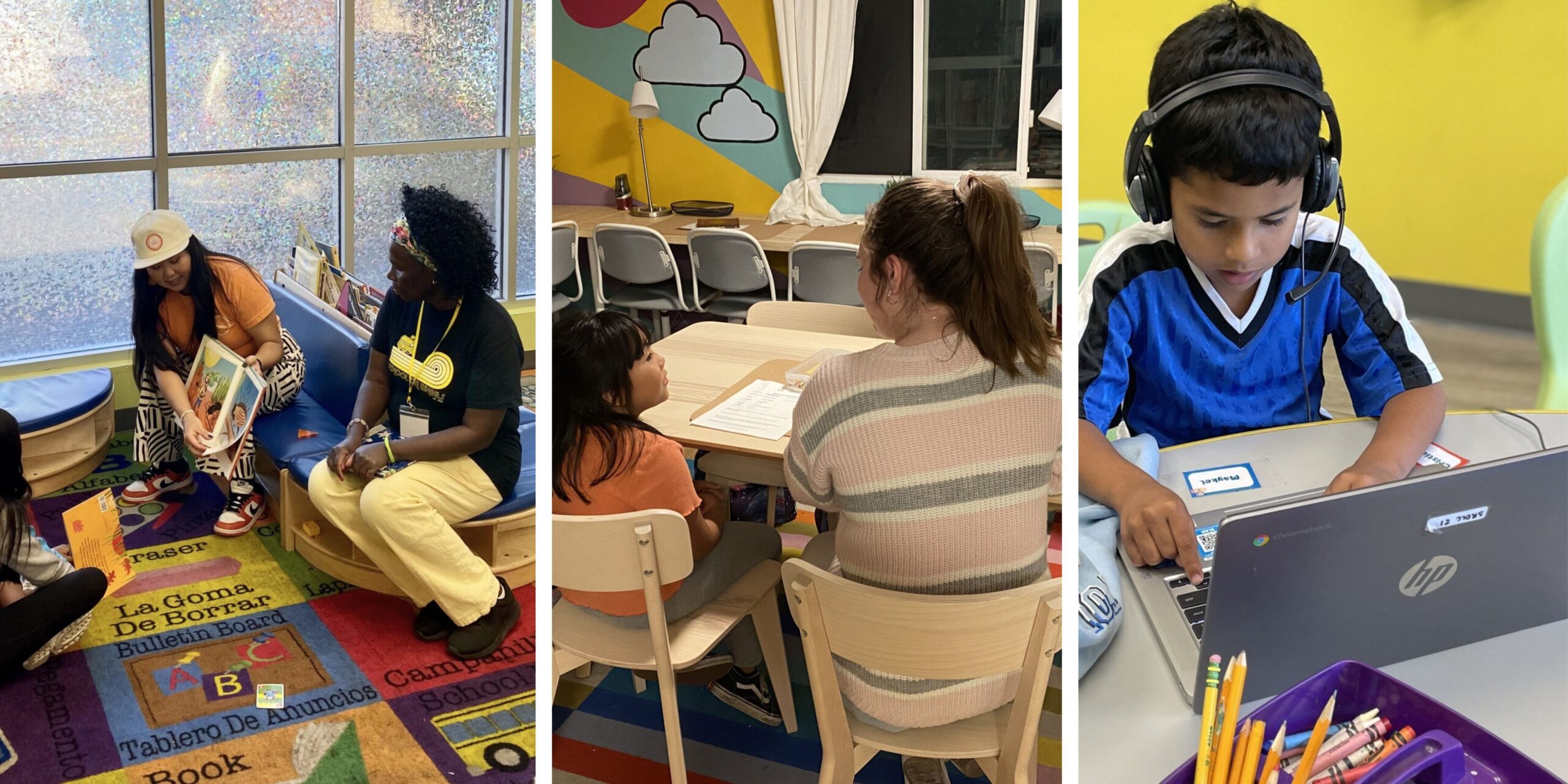
Welcome to our English Learners (EL) Resource Support Hub! Explore helpful tools, websites, and activities designed to support language development, strengthen academic skills, and provide engaging learning opportunities for students and tutors.
Browse EL resources using the drop-down categories below.
Explore the session resources below to help support English Learner (EL) students. These carefully selected tools provide engaging activities, skill-building practice, and helpful strategies, along with additional links to support student learning in meaningful and accessible ways. Browse resources by using the drop-down categories below. All recommendations have been reviewed by School on Wheels.

Who are English Learners (ELs)?
An English Learner (EL) is a student whose primary language spoken at home is not English and who is still developing academic proficiency in English.

How do English Learners (ELs) learn best?
English Learners (ELs) benefit most from a safe, inclusive learning environment that recognizes their home language as an asset in developing language skills and academic English proficiency. Click here to learn more.

Modeling Strategies
Click here to learn more about effective modeling strategies for English Learners.

Check for Understanding
Click here to read about different ways to check for your student’s understanding.
Session Tips
- Spend time each tutoring session on topics your student finds interesting and likes to talk about. Read, write, draw, and learn vocabulary related to this topic.
- Create a “personal dictionary” with your student for new English vocabulary. Review and add to the dictionary during every tutoring session.
- Read to your student if a text is too complex. Students can gain valuable literacy skills through texts that are read to them. Ask comprehension questions, identify new vocabulary, and explore the information in the text.
- If you can speak and understand your student’s home language, spend part of each tutoring session conversing, reading, and asking open-ended questions in that language.
- Many reading skills work in both languages, like understanding stories, knowing where a story takes place, and seeing what a character thinks or feels. Skills like paying attention, planning, and solving problems can also be used in both languages.

School on Wheels SELebrate You! Program
Click here to learn more and sign up for our School on Wheels Social and Emotional Learning Program.


6 Strategies for Building Relationships with ELs
Click here to read more about relationship building with EL students.
Session Tips
- Learning a new language takes confidence, patience, and a willingness to make mistakes. SEL strategies help tutors build safe, supportive relationships where students feel connected, understood, and proud, making them more likely to participate, express themselves, and practice English.
- Build connection: Get to know your student and create a space where they feel comfortable speaking English and making mistakes.
- Build confidence: Celebrate small wins, such as using a new word, answering a question, or trying something independently.
- Support student voice and choice: Let students choose topics, books, or activities that interest them and give them opportunities to share their ideas.
- Make learning inclusive: Connect lessons to students’ cultures, experiences, and background knowledge so they can use what they already know to build new language skills.

Background Knowledge
Click here to learn how to build on English Learners’ background knowledge and connect it to new learning.
Scaffolding
Explore these resources to support English Learners: reading scaffolding tips & writing scaffolding tips.

Language Use
Click here to learn how to incorporate students’ native languages alongside English to support learning.
Session Tips
- Suggested Reading & Writing Practice
- Explore high/low books and stories with few or no words, such as wordless books/graphic novels. Click here for a list of high/low books for children and click here for a list of wordless books.
- Search nonfiction topics such as science, history, current events, and biographies, as well as poems and song lyrics.
- Sign up for myON to access English and Spanish eBooks; read stories together, discuss images, and practice defining new words.
- Try Spanish-language titles on myON, such as “Contar Crayones” (Count Crayons), “Un Cachorro de Tigre“ (A Tiger Cub), “Contar Hasta Diez” (Count to Ten), “Ten Cuidado” (Be Careful), “El Parque” (The Park), “Las alas” (Wings), “Los Cinco Sentidos“ (The Five Senses), and “Contemos El Dinero” (Let’s Count Money).
- To sign up your student for a myON account, select the form for your student’s program: click here for the Literacy Program (K-4th), click here for the Academic Program (5-8th), click here for the BUS Program (9-12th).
- Build writing skills with 826 Digital using creative prompts and multi-session projects, such as Backward Storytelling. Click here to try out this activity. Then, follow up with this transition-word practice to enrich the English language used in the Backward Storytelling activity. Click here to view the transition word handout, and click here to create a free account and explore 826 Digital.

Academic Language for English Learners
Click here to learn more about how to build academic language skills for English Learners.
English Learner Student Engagement
Explore these resources for tips on engaging English Learners: tips for teaching middle and high school ELs & ELs in middle and high school.

College Readiness for English Learners
Click here to learn more information on college readiness for English Learners.
Session Tips
- Build on background knowledge and connect students’ experiences and knowledge to academic English.
- Teach cognates and review words that are similar in English and Spanish to build vocabulary. Click here to view a list of English-Spanish cognates.
- Teach foundational language skills while keeping activities appropriate for the student’s age and learning level.
- Build academic vocabulary and use academic English words to support reading and writing. Click here to view a list of English academic words.
- You are welcome to try out these Unit 2 Ecology materials (Click here to view) shared by an Oakland School District science teacher who works with high school students new to the United States. Introduce vocabulary and concepts gradually, revisit them, and connect learning to students’ experiences.
- Tutoring Emergent Learners: A guide to tutoring literacy with Emergent English Speakers.
- Unite For Literacy. This free website offers eBooks in English and other languages, and can be accessed on any electronic device.
- For more English Learner resources, click here to check out our Tutoring Session Resources page.